


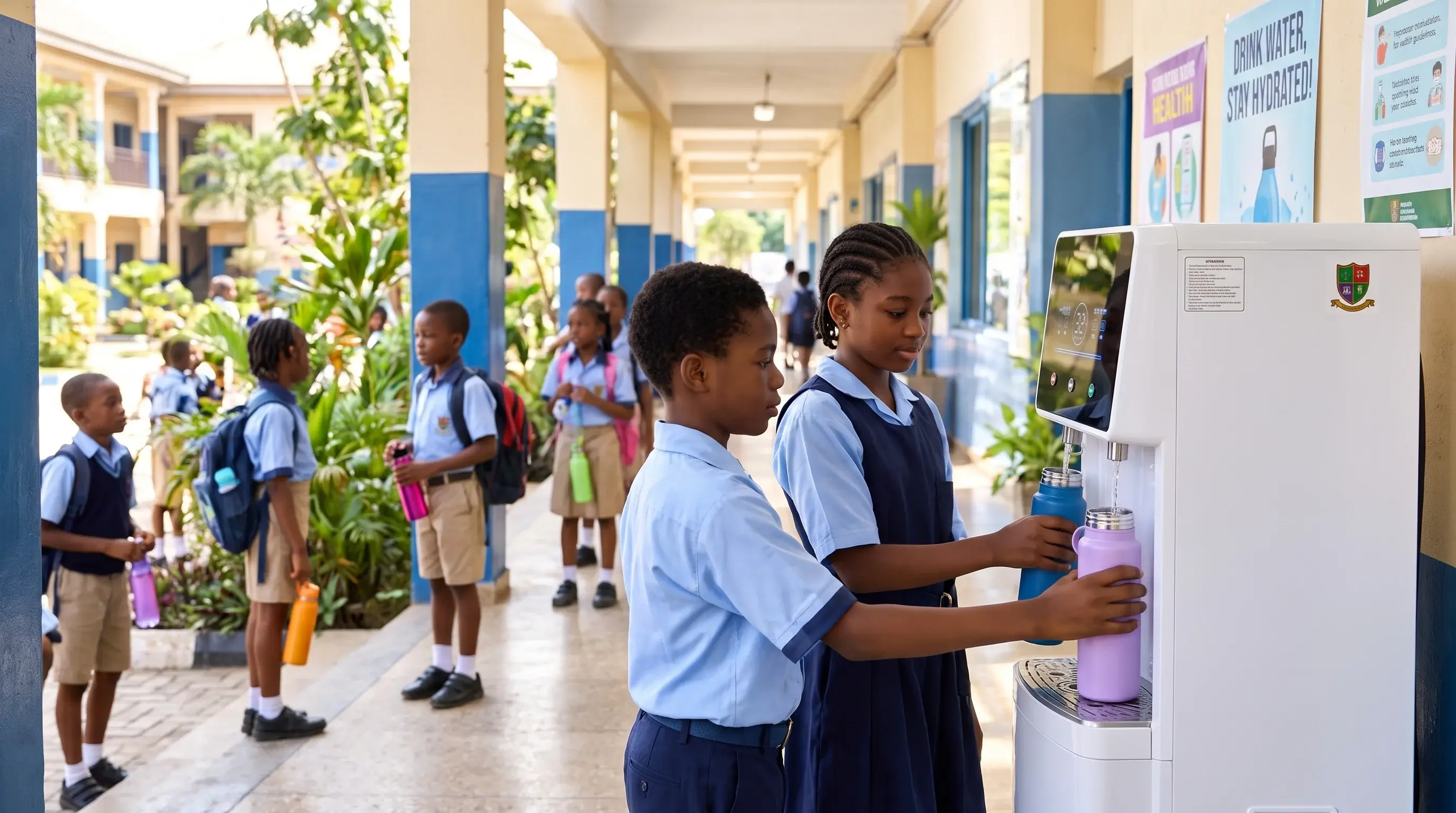
A private school in Lagos, Abuja, Ogun, or Rivers isn't a household, and its water needs shouldn't be planned like one. Hundreds of students and staff drawing from the same source, using the same storage tanks, and relying on the same taps every day changes the calculation entirely from how much capacity you need to how often the system has to be serviced. Here's what facility managers and school owners should actually be planning around.
Why Schools Need More Than a Household Filter
Schools serve many people daily, so water quality, storage hygiene and consistent access are important for drinking and food preparation. A single point of contamination: a dirty tank, a failed filter, an untested borehole affects every student and staff member drawing from that source, not just one household.
Is a Standard Home Purifier Enough for a School?
Capacity depends on student population and daily water demand. Larger institutions may require commercial or high-capacity systems. A unit sized for a family of six will not keep pace with a school of several hundred students, even if the underlying filtration technology is the same, the limiting factor is throughput, not purification quality.
Should School Borehole Water Be Tested?
Yes. Testing helps identify the contaminants and treatment stages required for the school's source water. A school's borehole may have been drilled years ago under different water-table conditions, so a current test is what actually tells you what treatment stages are needed now, not what was assumed when the well was first put in.
Can One System Supply the Entire School?
A properly sized central system can treat water for multiple points, depending on demand and the building's plumbing. Centralizing treatment at one point, rather than installing separate small units at every tap, is usually more manageable to maintain and budget for provided the plumbing layout and demand calculations support it.
See commercial-capacity options on the Commercial Purifiers page.
How Often Should a School Water System Be Maintained?
Maintenance should follow equipment specifications and account for usage, source-water quality and filter condition. A system running at school-scale usage will typically need more frequent attention than the same unit in a household, simply because of the volume passing through it daily.
Budgeting for School Water Purification
Include equipment, installation, water testing, replacement filters, servicing, storage and future capacity needs. A one-time equipment cost is only part of the real budget; ongoing servicing, filter replacement, and planning for enrollment growth all belong in the same conversation, ideally before a system is purchased rather than after.
Frequently Asked Questions
Q: Why do schools need reliable drinking-water treatment?
A: Schools serve many people daily, so water quality, storage hygiene and consistent access are important for drinking and food preparation.
Q: Is a standard home purifier enough for a school?
A: Capacity depends on student population and daily water demand. Larger institutions may require commercial or high-capacity systems.
Q: Should school borehole water be tested?
A: Yes. Testing helps identify the contaminants and treatment stages required for the school's source water.
Q: Can one filtration system supply the entire school?
A: A properly sized central system can treat water for multiple points, depending on demand and the building's plumbing.
Q: How often should a school water system be maintained?
A: Maintenance should follow equipment specifications and account for usage, source-water quality and filter condition.
Q: What should schools consider when budgeting for purification?
A: Include equipment, installation, water testing, replacement filters, servicing, storage and future capacity needs.
Planning water purification for your school? Request a site assessment or call +234-708-063-7319. iClear serves private schools across Lagos, Abuja, Ogun, and Rivers.