


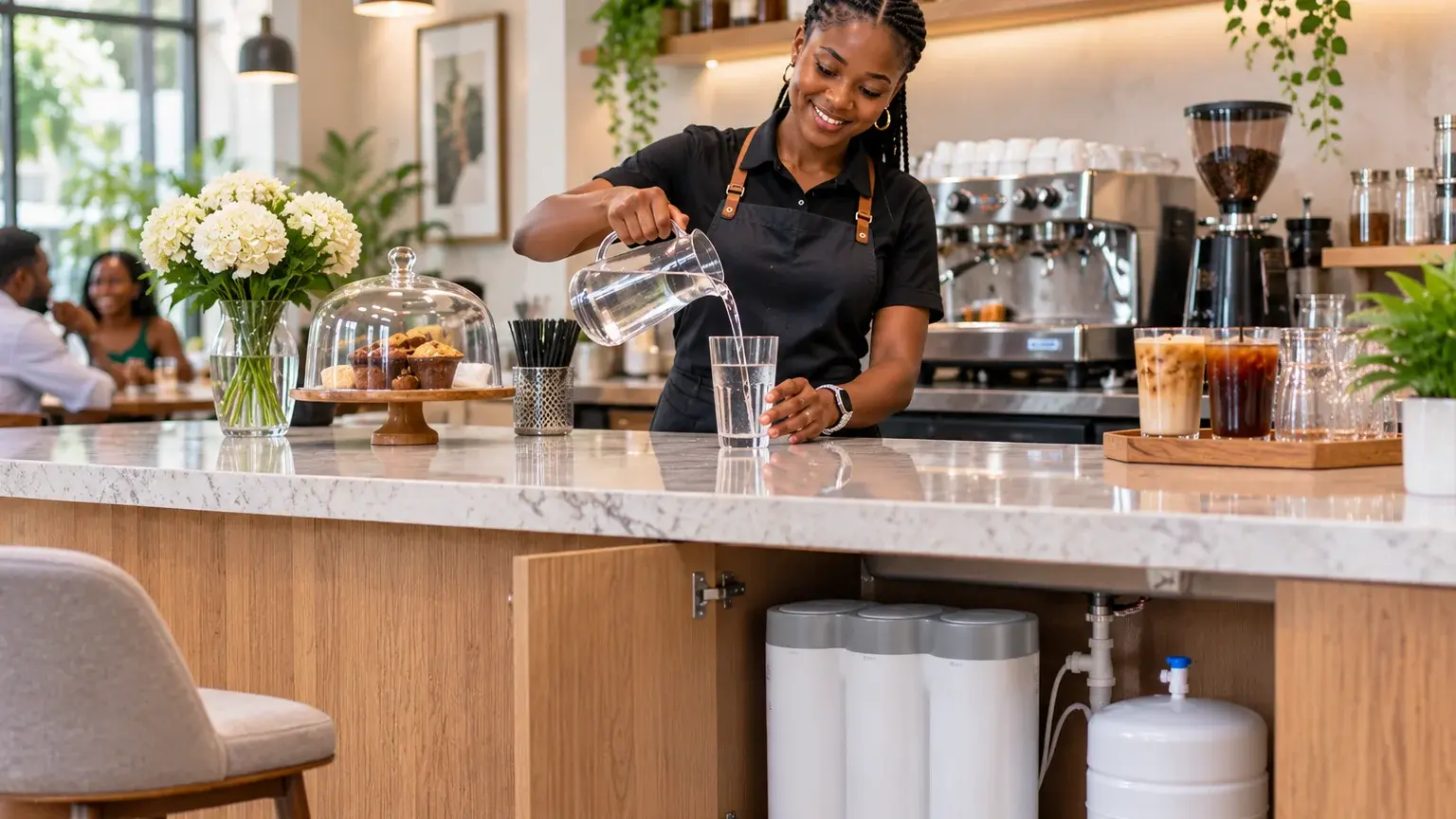
If you run a restaurant or café in Lekki, Victoria Island, Ikeja, Yaba or Surulere, water touches almost everything your customers experience: the glass on the table, the ice in the drink, the tea, the coffee, the rice and the soup. Yet it is often the one input nobody checks. This guide is for owners, managers and procurement teams who want to understand what water quality means for a food business, and how to plan for it.
Why water quality matters in a restaurant
Water affects drinking service, food preparation, ice, beverages, cleaning and equipment, so inconsistent water quality can affect several parts of your operation at once.
- Drinks and ice: Taste, smell and clarity show up immediately in cold drinks and ice.
- Tea and coffee: Minerals and chlorine-type tastes change how a cup tastes, and scale builds up in machines.
- Cooking: Stocks, soups, rice and boiled foods all absorb the character of the water used.
- Cleaning and dishwashing: Hard water leaves spots on glasses and cutlery and uses more detergent.
- Equipment: Kettles, water heaters, coffee machines, steamers and ice machines are all water-contact equipment.
Point-of-use or whole-premises treatment?
The right answer depends on where water is used and what is in it. Treatment at a single drinking-water point improves what customers drink and what goes into beverages. Treatment where water enters the building protects pipes and equipment from sediment, iron or hardness. Many businesses end up needing central treatment plus a dedicated drinking-water purifier. A water test tells you which path fits your premises.
Hard water, scale and equipment costs
Hardness contributes to mineral scale in heaters, kettles, coffee equipment and other water-contact surfaces. Scale means more descaling, more downtime, more energy use and shorter equipment life. If you see white chalky deposits on kettles and taps, that is hard water at work. iClear RO removes over 95% of calcium and magnesium from drinking and cooking water.
Capacity: plan around your busiest hour, not an average day
A purifier sized for a household can quickly become a bottleneck in a busy kitchen. Before you choose a system, work out:
- How many litres of drinking and cooking water you use on a normal day and on your busiest day.
- Your peak-hour demand, including ice and beverage service.
- How many outlets need purified water, such as the bar, kitchen and customer dispensers.
- What space you have and how you power equipment when light goes (generator or inverter hours).
Maintenance and record keeping
Commercial use means higher throughput, so filters wear faster. Set a replacement calendar based on the manufacturer's guidance and your actual usage, and keep a simple service log covering filter changes, leak checks, tank cleaning and water-quality checks. A clear record helps your team stay consistent and gives you something to show when partners or inspectors ask.
Bottled water versus your own purifier
Many food businesses still pay for 20L bottles and dispenser refills every week. Over a year the cost adds up, along with storage space and delivery uncertainty. Our office water machine versus 20L dispenser cost analysis shows how to run the numbers for your own premises.
How iClear can help commercial premises
iClear offers purification systems for businesses and establishments, including commercial-grade options on our commercial purifier page and a broader look at commercial water purification for schools, restaurants and gyms in Lagos. iClear systems are SGS and CE certified and qualified by the Kenya Water Institute, each unit purifies roughly 500 litres per unit of electricity, and support runs 24/7 with plumber dispatch within 24 hours. For higher-capacity needs, speak to the team about your daily volumes.
iClear offers free water tests in its coverage zones. Call +234-708-063-7319 or book a free consultation to confirm availability for your premises and get a recommendation sized for your kitchen.
Frequently Asked Questions
Q: Why does water quality matter in a restaurant?
A: Water affects drinking service, food preparation, ice, beverages, cleaning and equipment, so inconsistent water quality can affect multiple operations.
Q: Should restaurants use point-of-use or whole-house filtration?
A: It depends on where water is used and the contaminants present. Many businesses may need central treatment plus dedicated drinking-water purification.
Q: Can RO water be used for food and beverage preparation?
A: RO-treated water can be used where the system is properly designed, maintained and appropriate for the intended application.
Q: How does water hardness affect restaurant equipment?
A: Hardness can contribute to mineral scale in heaters, kettles, coffee equipment and other water-contact surfaces.
Q: How often should a commercial purifier be serviced?
A: It depends on water quality, throughput and equipment specifications. Higher-use environments may require more frequent checks.
Q: Can iClear design water treatment for commercial premises?
A: iClear's commercial water-treatment offering is intended for establishments that need higher-capacity purification. Call +234-708-063-7319 to discuss your daily volumes.